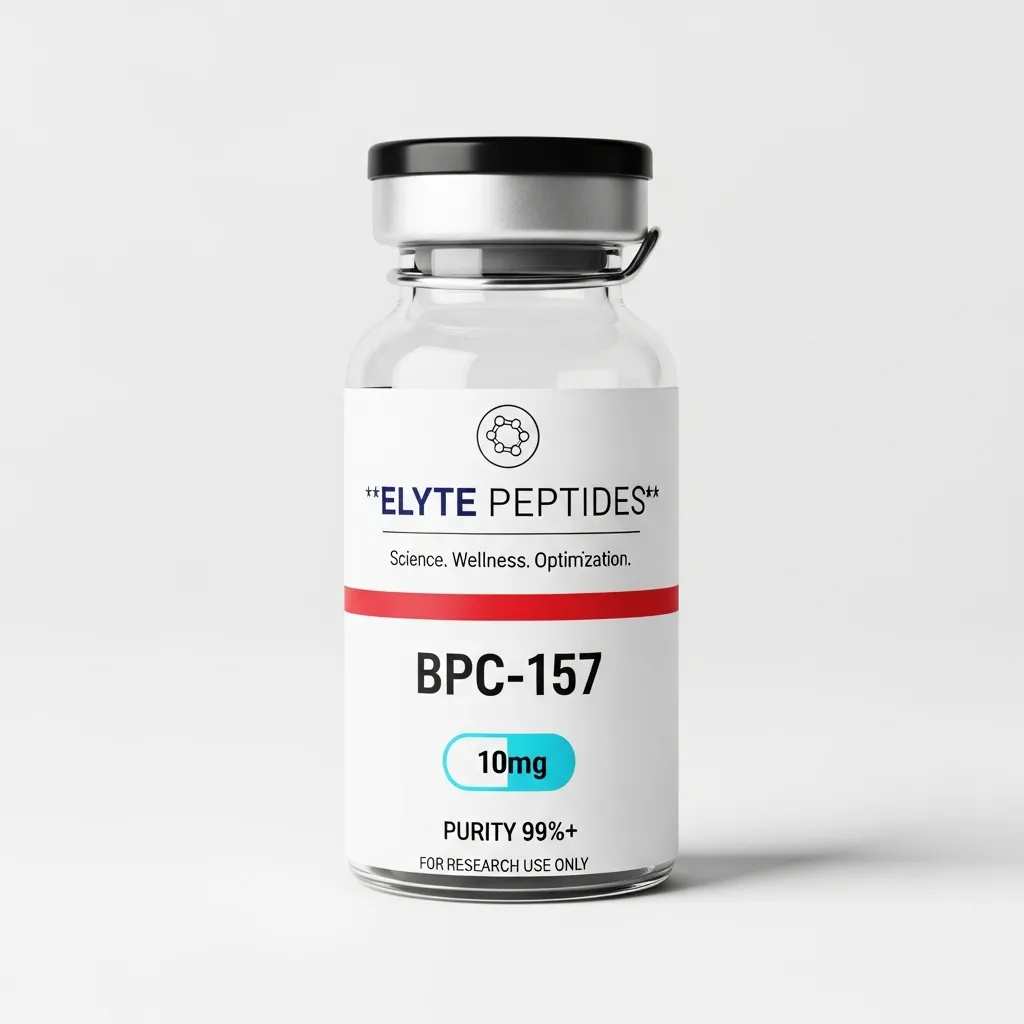
BPC-157
Gastric pentadecapeptide for tissue regeneration and wound healing research.
Description
Gastric pentadecapeptide for tissue regeneration and wound healing research.
BPC-157 (Body Protection Compound-157) is a 15-amino acid peptide derived from a partial sequence of human gastric juice protein. Its mechanism of action involves upregulation of growth factor expression including VEGF (vascular endothelial growth factor), FGF (fibroblast growth factor), and activation of the FAK-paxillin signaling pathway, which collectively promote angiogenesis, fibroblast migration, and collagen deposition. Extensive preclinical research from the laboratory of Predrag Sikiric at the University of Zagreb has demonstrated BPC-157's effects across numerous animal models including tendon transection (Staresinic et al., Journal of Orthopaedic Research, 2003), muscle crushing injuries, ligament healing, and gastrointestinal lesion repair. Studies suggest BPC-157 operates through the nitric oxide (NO) system and interacts with the dopaminergic system, which may explain its observed gastroprotective and cytoprotective properties in rodent models. Compared to other tissue repair peptides like TB-500 (Thymosin Beta-4), BPC-157 appears to have a stronger affinity for gastrointestinal tissue repair and tendon healing, while TB-500 shows broader systemic tissue migration. BPC-157 is notably stable in human gastric juice, an unusual property for a peptide. Most published research remains in animal models; no large-scale human clinical trials have been completed to date. Store lyophilized powder at -20C; reconstitute with bacteriostatic water and refrigerate at 2-8C for up to 14 days. BPC-157 is among the most widely studied peptides in regenerative medicine laboratories, orthopedic research institutions, and gastroenterology departments.
This product is supplied as a lyophilized powder and is intended for laboratory and research use only. Not for human consumption. Each vial contains 10mg of research-grade material.
Research Applications
- Wound healing and tissue regeneration
- Angiogenesis and vascular repair
- Tendon, ligament, and connective tissue support
- Gastrointestinal health studies
Specifications
- Size
- 10mg
- Purity
- ≥98% (HPLC)
- Form
- Lyophilized Powder
- Molecular Formula
- C62H98N16O22
- Molecular Weight
- 1419.56 g/mol
- Sequence
- Gly-Glu-Pro-Pro-Pro-Gly-Lys-Pro-Ala-Asp-Asp-Ala-Gly-Leu-Val
Storage & Handling
- Long-term storage: -20°C in a sealed, light-protected container
- Short-term storage: 2-8°C (refrigerated) for up to 30 days
- Reconstituted: Store at 2-8°C and use within 30 days
- Avoid: Repeated freeze-thaw cycles, direct sunlight, and moisture exposure
- Reconstitution: Use bacteriostatic water or sterile water for injection
Frequently Asked Questions
What is BPC-157 and how does it work?
What research has been done on BPC-157?
How does BPC-157 compare to TB-500 (Thymosin Beta-4)?
What is the recommended reconstitution protocol for BPC-157?
What purity testing is performed on BPC-157?
Related Products
Research Use Only. This product is not intended for human consumption, therapeutic use, or diagnostic purposes. All peptides sold by Elyte Peptides are strictly for in-vitro research and laboratory use. By purchasing, you agree to use this product in compliance with all applicable laws and regulations.